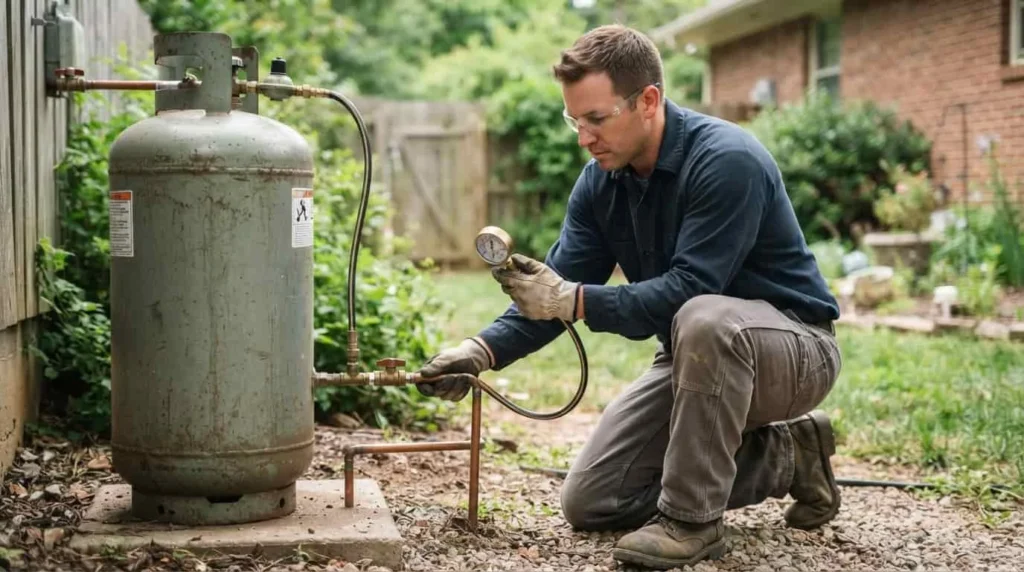

A propane tank installation involves five steps: sizing the tank, running a site survey, meeting clearance and permit rules, setting the tank on a pad or in the ground, then connecting and pressure-testing the gas line. A licensed technician has to do the physical work; homeowners choose the size and location.
How tank size is chosen
Size depends on what the propane has to run, not on the size of the house alone. A 120-gallon tank (which holds roughly 96 gallons when full, since tanks are only filled to 80% capacity) covers a single appliance like a water heater. A 250-gallon tank, holding about 200 gallons full, handles two appliances such as a water heater and a generator. A 500-gallon tank, the most common size for whole-home heating, holds around 400 gallons. Homes running every appliance on propane, or larger properties, typically move up to a 1,000-gallon tank.
A propane supplier will usually ask about square footage, number of propane appliances, and local climate before recommending a size. This is a case where a phone quote is less reliable than a technician actually walking the property.
Above-ground or underground
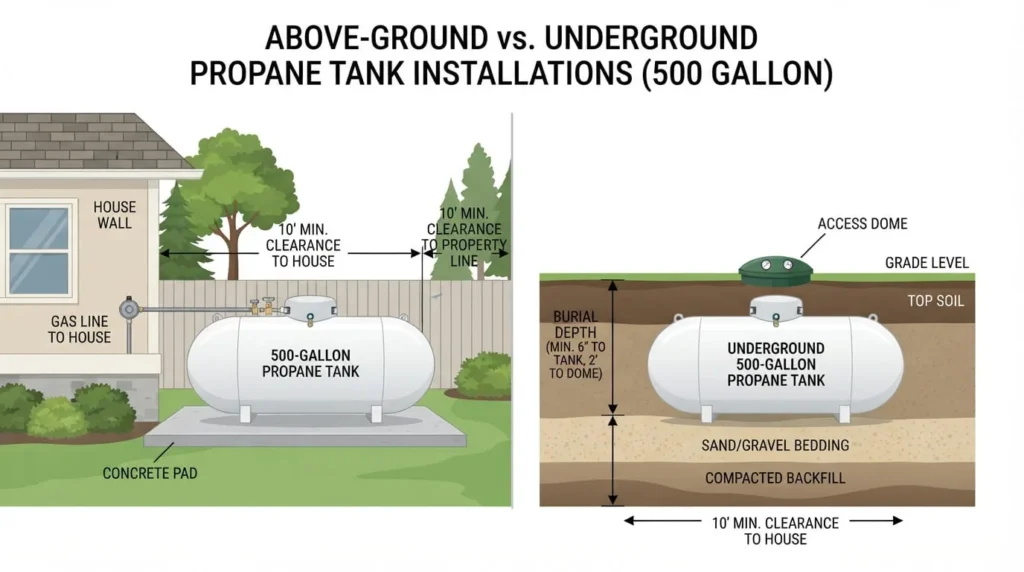
Above-ground tanks cost less to install and take less time, often just a few hours to half a day for a swap-out or new above-ground setup. Underground tanks take longer, sometimes a full day including excavation, and need trenching equipment that isn’t available everywhere. Underground tanks also need cathodic protection, a coating and electrical system that stops the buried steel from corroding. In exchange, an underground tank keeps the yard clear and hides the equipment, which matters for anyone who cares about curb appeal.
Site survey and placement rules
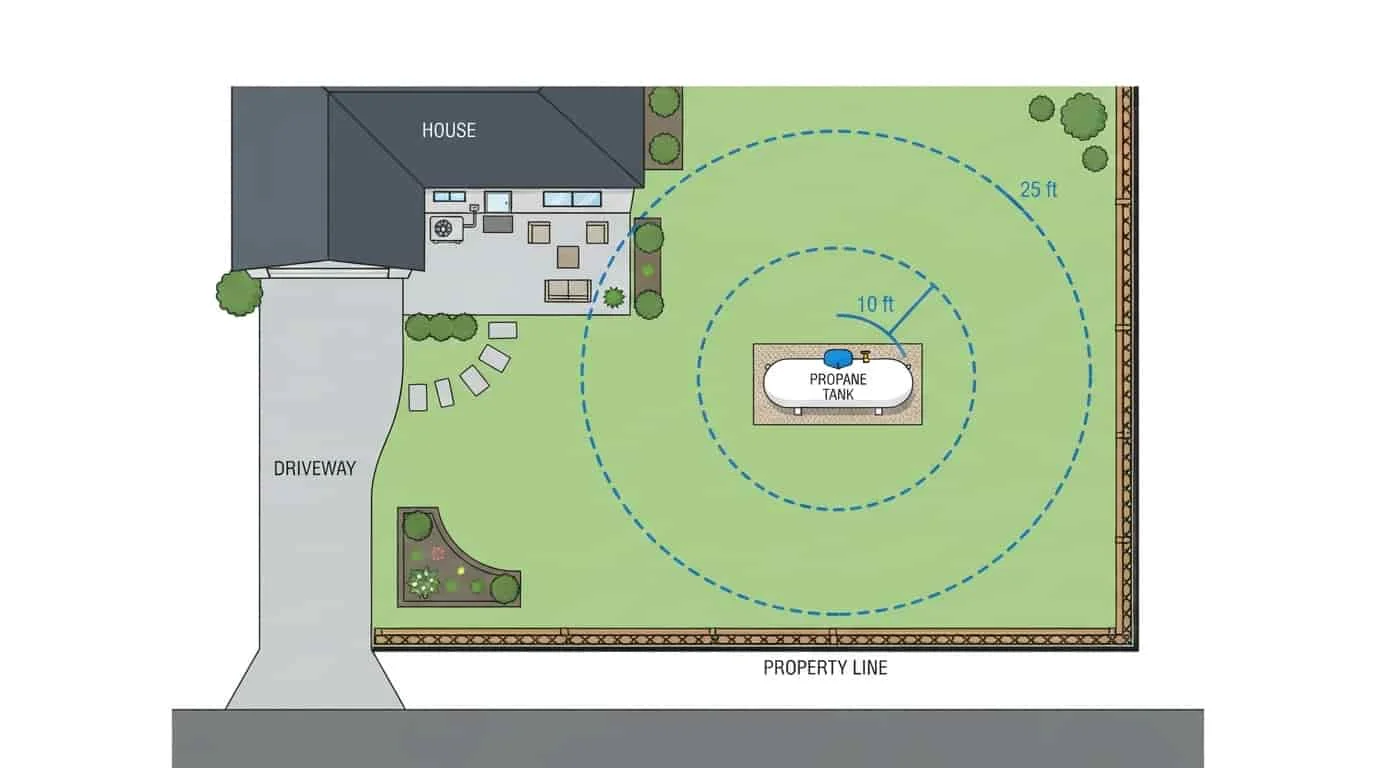
Tanks between 125 and 500 gallons need 10 feet from the house and from any property line that could later be built on.
Tanks up to 2,000 gallons, above ground, need 25 feet from the house and from the property line.
Underground tanks up to 2,000 gallons follow the same 10-foot rule as smaller above-ground tanks.
The tank also needs to sit near a driveway or road, on flat ground, so the delivery truck can reach it without a long hose run.
Permits and who can install
Permit requirements change by state and even by municipality, so this step can’t be skipped based on what a neighbor did. A licensed propane technician has to perform the actual installation; a homeowner or company employee also needs to be present that day, since the technician will walk through the shutoff valve, the gauge, and leak-recognition with whoever will be using the system.
Preparing the ground
Above-ground tanks don’t strictly need a concrete pad, but a supplier will usually still pour one, or set the tank on blocks, because a level surface avoids strain on the outlet valve and piping over time. Underground tanks need a hole dug to the depth and distance the tank’s rating calls for; if the property doesn’t already have one that fits, the crew digs it as part of the job.
Setting the tank and running the gas line
Once the pad or hole is ready, the crew lifts the tank into place with a boom truck or a small crane for larger sizes, then levels it. From there, they run the gas line from the tank to the house. Copper tubing and polyethylene piping are the two materials used underground, chosen for how well they hold up against soil moisture and temperature swings over decades. The company doing the tank installation typically handles the line up to the house; a separate HVAC contractor or plumber then connects it to appliances inside.
Testing before the gas turns on
After the line is connected, the technician pressure-tests the whole system to check for leaks before propane ever flows through it. Only once that test passes does the delivery driver fill the tank for the first time.
What propane tank installation costs
Pricing depends heavily on tank ownership, size, and whether the job is above or below ground. For a standard above-ground swap or new install, a typical service dispatch fee runs around $70, with the installation itself averaging close to $250 for a leased, standard above-ground tank. Underground tanks, or any job needing extra excavation or gas-line work, cost more, and prices shift by region. Leasing a tank instead of buying one usually lowers the upfront installation cost, since the supplier absorbs more of that expense in exchange for a delivery contract.
Stat needed here: figures above reflect one national supplier’s published averages; costs from local or regional propane companies can differ, so get a written quote before budgeting.
Common mistakes that delay installation
The most common holdup is picking a spot that looks fine but fails the distance check, forcing a second site visit. Another is assuming a homeowner can dig the hole or run the line themselves; propane lines are not a DIY project, and doing so risks both safety and code compliance. A third is skipping the permit step because a similar tank already sits next door, when the rules that applied to that tank may have changed or never matched the current property lines.
FAQ‘S
1. How long does propane tank installation take?
An above-ground tank install or swap usually takes a couple of hours up to half a day. An underground tank, including digging, can take a full day.
2. Can I install my own propane tank?
No. A licensed propane technician has to install the tank and connect the gas line, and a resident or company employee needs to be present during the work.
3. How close can a propane tank be to my house?
It depends on the tank size. Tanks under 125 gallons need at least 5 feet from the structure; 125- to 500-gallon tanks need 10 feet; larger above-ground tanks up to 2,000 gallons need 25 feet.
4. Does propane tank installation include the gas line?
The supplier typically installs the line from the tank up to the house. Connecting it to indoor appliances is usually a separate job for an HVAC contractor or plumber.
5. Do underground propane tanks need special maintenance?
Yes. They need cathodic protection to prevent corrosion, and that protection should be tested periodically, similar to how cylinders need re-certification every five to ten years.